When Policy Unlocks Demand, Execution Determines the Winners
Why AI-Driven Construction Is Built for the Next Phase of ADU Growth
Rapid and precise construction of concrete structures #ADU #3DPrinting #AI
By the close of 2025, the national conversation around Accessory Dwelling Units had shifted decisively. Across Massachusetts, California, Florida, New York, and major urban markets like Los Angeles and the Bay Area, reporting revealed a housing environment no longer defined by theoretical support for ADUs, but by a far more practical question: Who can actually deliver them at scale, on time, and within regulatory intent?
We believe the next leaders will be AI-driven construction operators — those that responsibly integrate robotics and intelligence directly into the building process. The market is no longer debating whether this shift will occur, but rather who is prepared today to execute AI-driven, robotic construction well.
We know that states are deploying capital, cities are rewriting ordinances, and builders are professionalizing their offerings. Yet the distance between authorization and occupancy [execution gap] continues to widen. This widening gap between approval and delivery defines the execution challenge where SecureTech Innovations (SecureTech), through its wholly owned subsidiary AI UltraProd, is intentionally positioned to operate.
That gap is becoming increasingly visible across jurisdictions. In Massachusetts, recent ADU-focused initiatives — spanning financing tools, design programs, and affordability-linked mechanisms — reflect an institutional shift toward treating ADUs as durable housing infrastructure rather than experimental infill. Similar intent is evident in Bonita Springs’ move toward formal ADU ordinances and Greenport’s proposal to allow ADUs in existing buildings without planning-board review. Together, these actions signal the shared objective of removing friction, accelerating approvals, and converting policy intent into real housing output.
However, the Chalcifica ruling in California illustrates the boundary conditions of this momentum. Authorization without disciplined execution can invite legal resistance and community pushback, particularly when projects drift beyond the proportional scale ADU frameworks were designed to support. The lesson emerging from recent reporting is not opposition to growth, but the necessity of precision growth. Meaning, delivery models that are fast, compliant, and structurally aligned with regulatory and neighborhood expectations.
AI UltraProd’s construction model was designed for exactly this environment.
This is the point at which policy ambition meets construction reality.
Recent coverage highlights a market that increasingly values predictability over novelty. Reporting on “best ADU builders” in the Bay Area and turnkey offerings from Dream Home and Energize Builders in Los Angeles underscores the same theme: homeowners and municipalities want clear timelines, cost certainty, and reliable outcomes.
Traditional construction struggles to meet these expectations. Labor shortages, fragmented subcontracting, material waste, and elongated build cycles are systemic constraints. AI UltraProd addresses these constraints. Not by incrementally improving legacy workflows, but by re-architecting the build process itself, unlocking meaningful cost and time efficiencies.
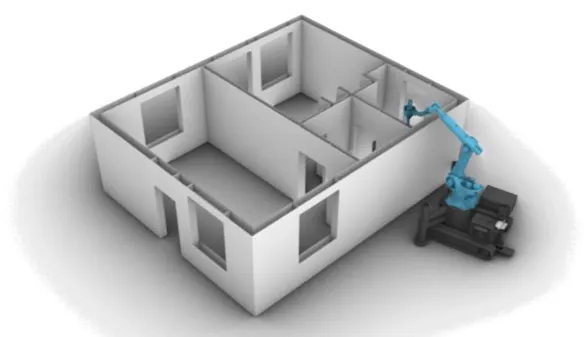
Unlike gantry-based printers or modular systems constrained by transport and assembly, AI UltraProd deploys multi-degree-of-freedom robotic 3D printing arms capable of adaptive, on-site fabrication. These robotic systems leverage AI-driven motion control and pathing algorithms that dynamically adjust geometry, material flow, and structural parameters in real time. The result is not automation for its own sake, but intelligent construction, which is always responsive, precise, and repeatable.
Further, execution speed alone is insufficient if it compromises durability, compliance, or sustainability. That is why AI UltraProd’s proprietary ultra-high-performance concrete (UHPC) composite is foundational to its differentiation. The material enables thinner wall profiles without sacrificing strength, reduces waste relative to conventional pours, and supports rapid build timelines aligned with ADU economics.
As municipalities emphasize resilience, longevity, and environmental responsibility, which is implicit in both grant requirements and zoning reforms, materials science becomes a strategic lever, not an afterthought. AI UltraProd’s issued and pending patents spanning robotic motion, AI manufacturing intelligence, and advanced composites create a defensible moat that aligns technical capability with regulatory and market demand.
Another consistent signal across recent reporting seemed to be, who is not driving ADU supply: large national developers. Instead, the market depends on small builders, regional contractors, and micro-developers. These are the very operators highlighted in Bay Area builder coverage and municipal initiatives. These are not operators AI UltraProd would replace, but rather multiply their capacity.
By reducing labor dependency, compressing construction timelines, and standardizing outcomes, AI UltraProd enables small and mid-sized operators to deliver more units per year without proportionally increasing overhead or risk.
Based on the December 22–26 reporting cycle, the market appears to be entering its execution phase. ADUs are no longer a policy debate; they are an operational challenge. The winners in this next phase will not be those who advocate most loudly, but those who can translate zoning, funding mechanisms, and homeowner intent into finished, livable housing.
AI UltraProd is ready for this moment. Its AI-driven robotic 3D construction platform, proprietary materials, and patent-backed systems are not speculative technologies. These are execution tools already delivering real-world tangible results, aligned with the constraints and opportunities identified in recent reporting.
As ADUs move from pilot programs to a core component of U.S. housing supply, the implications are clear. Policy momentum has created demand, but execution will determine outcomes.
SecureTech’s strategy reflects that reality. AI UltraProd will operate precisely where policy intent meets production discipline, delivering housing at the speed, precision, and scale the next phase of the ADU market now requires.
AI UltraProd isn’t a concept! It’s real. It’s intelligent. And it’s operational — already generating seven-figure revenues.
For inquiries, collaboration, or strategic interest, contact ir@securetechinnovations.com